
What should I know before I try waxing at home?
Start with a reality check. Waxing at home can save money, but it’s not the same as a professional service. Know your skin type, hair length (about 1/4 inch / 6 mm is ideal), and whether you have conditions that make waxing risky (recent sunburn, retinoid use, very sensitive or broken skin, skin infections). Do a small patch test 24–48 hours before a full session to check for allergic reaction or excessive irritation.
If you are pregnant, diabetic, on acne treatments (retinoids, isotretinoin) or have any skin disorder, check with a doctor or a pro first.
Which waxing method should I use at home to avoid burns?
Choose the right wax and warmer.
What types of wax are safest for beginners?
-
Hard (stripless) wax: gentle on sensitive areas and adheres to hair more than skin. Good for brows, upper lip, bikini, underarms. Less chance of skin trauma.
-
Soft wax (strip wax): better for large areas like legs and arms but can irritate sensitive skin if overheated or removed poorly.
-
Pre-waxed strips: quick and low-risk for beginners; useful for small areas or touch-ups.
What wax warmer should I use to prevent burns?
-
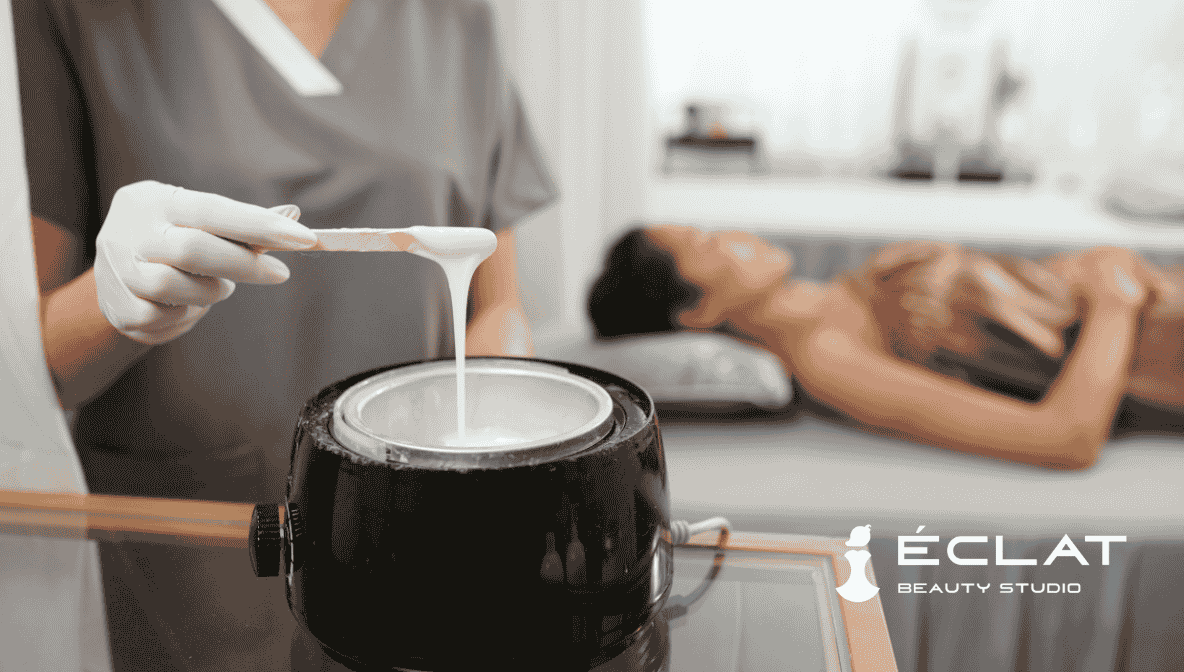
Use a thermostat-controlled warmer. Cheap open pots heat unevenly and cause hotspots.
-
Always measure temperature with the warmer’s built-in gauge or test wax on your wrist. Wax should feel warm, not hot. If it feels hot on the inside of your wrist, it’s too hot.
-
Never heat wax in a microwave without precise instructions — it causes uneven heating and burn risk.
How do I prepare my skin properly before waxing?
Good prep halves the problems.
What pre-wax steps reduce pain and burning?
-
Clean the area with mild soap and water to remove oils and lotions.
-
Exfoliate gently 24–48 hours before waxing to remove dead skin and prevent ingrown hairs. Don’t exfoliate right before waxing.
-
If you have oily skin, use a light powder (talc or baby powder) on the area to help wax grip hair and not skin.
-
Trim very long hair to about 1/4 inch. Too-long hair tugs and makes removal harder. If hair is too short, wax won’t grab.
-
Avoid caffeine just before waxing; it can increase skin sensitivity.
Should I take pain relief before waxing?
A standard over-the-counter pain reliever (ibuprofen) taken 30–45 minutes before can reduce discomfort and inflammation for some people. Do not exceed recommended doses and avoid if you have contraindications.
How should I heat and test wax to avoid burns?
Don’t guess the temperature.
What is the safe way to heat wax?
-
Follow manufacturer instructions for the specific wax and warmer.
-
Heat in short intervals, stir, and let heat settle before testing.
-
Test on the inside of your wrist — the skin there is sensitive and gives a good sense of temperature. Wax should be warm and spreadable, not scalding.
How do I apply wax without burning?
-
Spread a thin, even layer. Thick globs hold heat and increase burn risk.
-
Keep wax moving; don’t leave hot applicators on skin.
-
For strip (soft) wax, apply in the direction of hair growth and remove against it. For hard wax, apply against hair growth and remove with the growth direction — this is gentler.
-
Don’t reheat wax repeatedly making it hotter; replace wax if it gets too thick.
What technique reduces skin trauma and gives salon results?
Technique matters more than force.
How do I apply, press and remove strips or hard wax correctly?
-
Hold skin taut with the free hand to reduce pain and prevent bruising.
-
Remove strips quickly and parallel to the skin rather than straight up to lower chance of breakage or skin trauma.
-
Use short, firm pulls for small areas; longer pulls for large areas like legs.
-
After removal, immediately press the same area with your palm to calm nerves and reduce redness.
How many times can I wax the same spot?
Only once per area. Repeated pulls cause irritation, bruising, and burns.
What aftercare prevents burns, bumps and ingrown hairs?
Aftercare determines how your skin heals.
What should I do right after waxing?
-
Clean the area with a gentle, alcohol-free soothing wipe or saline.
-
Apply a calming lotion with aloe vera, calendula, or a mild antiseptic recommended for post-wax care.
-
Avoid hot showers, saunas, direct sun, swimming pools, and exercise for 24 hours to reduce irritation and infection risk.
-
Use loose, breathable clothing immediately after waxing to prevent friction.
How do I prevent ingrown hairs and bumps?
-
Exfoliate gently after 48 hours, and then 2–3 times weekly to prevent ingrown hairs.
-
Use a product with salicylic acid or glycolic acid if your skin tolerates it (test first). This helps keep follicles clear.
-
If a bump looks infected (growing, pus, severe pain), see a healthcare provider.
What if I get a burn or severe irritation?
Be careful and act fast.
How can I treat minor burns or severe redness from waxing?
-
For minor burns (red, hot skin without broken skin): cool the area with cool (not ice-cold) compresses for 10–15 minutes. Apply aloe vera gel and avoid occlusive products.
-
For blistering, broken skin, or signs of infection (increasing pain, pus, spreading redness), stop home treatments and see a doctor or a licensed aesthetician. Don’t pick or pop blisters.
When should I see a pro instead of doing it myself?
Choose pro service for complex or sensitive jobs.
Which areas and situations are better left to professionals?
-
Full bikini, Brazilian, and intimate waxing on first attempts.
-
Large-surface colour-treated, sunburned, or medication-sensitive skin.
-
If you’ve had poor outcomes at home before, or you need precise shaping (brows, facial hair), a pro will deliver cleaner results with lower risk.
How can Eclat Beauty help if I’m in Downtown Toronto?
Want guaranteed safe results? Visit a pro.
Why choose a salon like Eclat Beauty in Downtown Toronto?
We use professional-grade waxes, controlled heating, and trained staff who reduce risk and get consistent results. If you try at home and need a clean-up, or want a painless first-time experience, book a service or a consultation. We also offer aftercare tips tailored to Toronto weather and seasonal issues like winter dryness or summer humidity.
