
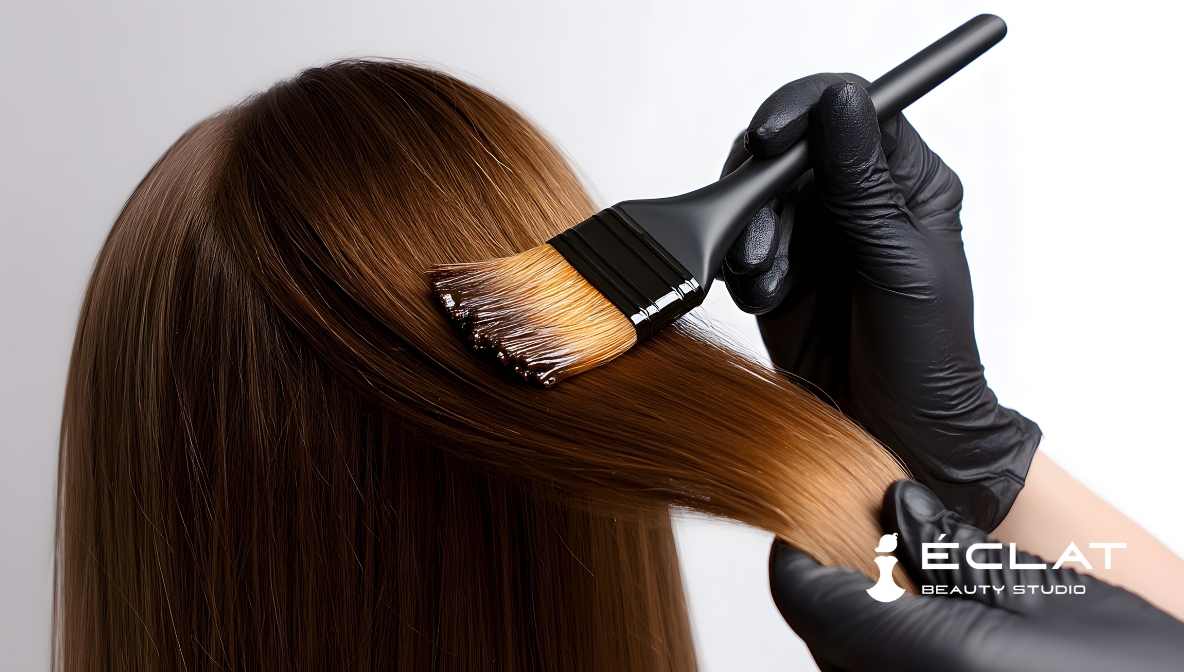
Hot roots happen when the hair near your scalp becomes noticeably lighter, warmer, or more orange than the rest of your hair. They can appear after colouring, bleaching, box dye, highlights, or root touch-ups. Understanding what causes hot roots and how to prevent them can help you achieve a more even hair colour.
Hot roots are especially noticeable when the root area develops strong yellow, orange, or red tones while the mid-lengths and ends remain darker or cooler. In this guide, we’ll explain what hot roots are, what causes hot roots, how to avoid hot roots when colouring hair, and how to fix hot roots safely.
What Are Hot Roots in Hair Colouring?
Hot roots are a noticeable difference between the colour of your roots and the rest of your hair, usually caused by the root area becoming lighter or warmer during colouring. The roots may look yellow, orange, red, or brighter than the mid-lengths and ends.
Hot roots can happen after:
- Bleaching or lightening
- Box dye
- Hair colouring
- Highlighting
- Root touch-ups
- Going lighter from dark hair
They can be particularly visible in brown or dark hair, where warm underlying pigments become more noticeable as the hair lifts. The difference may look subtle indoors but become much more obvious in bright daylight or under strong salon lighting.
Why Do Roots Process Faster Than the Rest of the Hair?
The root area can lighten faster because scalp heat speeds up the chemical reaction of colour and lightener. This is one of the main reasons the base area may become lighter or warmer before the lengths have reached the same level.
Your scalp provides natural warmth, while the mid-lengths and ends do not receive the same heat. Product placement, foils, processing time, and developer strength can also affect how quickly different sections of hair lift.
What Role Does Scalp Heat Play in Hot Roots?
Scalp heat can make the root area process faster during colouring or bleaching. This is why applying the same formula to the entire head at exactly the same time does not always produce an even result.
The root area is affected by:
- Natural scalp warmth
- Product and foil placement
- Developer strength
- Processing time
- The starting colour of the hair
For this reason, professional colourists often adjust application order, timing, and formulas depending on the client’s hair.
Why Does Virgin Hair React Differently?
Virgin hair can respond differently from previously coloured hair because its condition and colour history are not the same. New growth may lift more predictably, while previously coloured lengths can contain artificial pigment or have different levels of porosity.
Previously processed hair may also be:
- More dry
- More porous
- Previously dyed
- Difficult to lighten evenly
- More sensitive to additional chemical processing
This difference can contribute to uneven colour and hot roots, especially when trying to make dark or previously coloured hair significantly lighter.
What causes hot roots during bleaching or lightening?
Hot roots usually come from technique mistakes, not bad luck.
Which common mistakes lead to hot roots?
-
Applying bleach to roots first
-
Using a developer that is too strong
-
Leaving product on roots too long
-
Not separating hair sections properly
-
Rushing application time
-
Overlapping bleach on previously lightened hair
Hot roots are especially common when trying to go blonde quickly.
Does the developer strength matter?
Yes. Developer strength impacts how fast hair lifts.
General rule:
-
Higher developer lifts faster but increases risk of hot roots and damage
-
Lower developer lifts slower but gives more control
If you’re not experienced, strong developer choices can create uneven lift fast.
How can you avoid hot roots at home while colouring hair?
You can prevent hot roots with correct order and timing.
What is the best order to apply hair colour to prevent hot roots?
For most hair colouring and lightening situations:
-
Apply colour to mid-lengths first
-
Apply to ends next if needed
-
Apply to roots last
This helps balance processing speed. The lengths need more time because they don’t have scalp heat helping them.
How can you avoid hot roots with box dye?
Box dye hot roots happen because people apply it evenly everywhere at once.
Better method:
-
Apply to mid-lengths and ends first
-
Wait around half the recommended processing time
-
Apply to roots at the end
This simple change reduces the risk of roots turning brighter than the rest.
Why should you use smaller sections?
Large sections cause uneven saturation.
To avoid patchy or hot root results:
-
Use thin sections
-
Fully saturate each section
-
Work slowly and evenly
Poor sectioning is one of the biggest reasons home colour jobs turn uneven.
How do you avoid hot roots when going blonde in Toronto?
Going blonde is the most common reason people get hot roots.
Should you apply bleach to the roots last?
Yes, in most cases. Roots lift fast because of scalp heat.
A safer approach:
-
Start 1 inch away from the scalp
-
Work through mid-lengths first
-
Apply bleach to roots last
-
Then blend for even lift
This gives you a smoother blonde result.
Why do dark hair clients get hot roots more often?
Dark hair contains more warm pigment underneath. When it lifts, it naturally shows red/orange tones before it turns blonde. If your roots lift faster, they will reveal warmth sooner, which looks like hot roots.
Can toner fix hot roots?
Sometimes, yes. But toner is not magic.
When can toner fix hot roots?
Toner can help if:
-
The roots are only slightly warmer
-
The difference is mostly tone, not brightness
-
The hair is healthy enough for toning
A good toner can reduce brassiness and help match roots to the rest.
When can toner NOT fix hot roots?
Toner will not fix the issue if:
-
Roots are much lighter than the ends
-
There is a clear “band” or line
-
The root area is over-lifted or damaged
In that case, you need a root melt, shadow root, or colour correction.
What is a root melt and why is it the best hot roots fix?
A root melt (or shadow root) is a technique that blends a slightly deeper tone at the roots into the lighter hair.
It helps:
-
Soften the bright root area
-
Create a natural grow-out look
-
Reduce harsh contrast
-
Make the colour look more expensive and professional
Root melts are popular in Toronto because they’re lower maintenance and look good in different seasons.
How can you fix hot roots safely without damaging hair?
Fixing hot roots too fast can damage hair even more.
What should you do before correcting hot roots?
Before doing anything, check hair condition:
-
Is it stretchy when wet?
-
Does it feel rough or break easily?
-
Is the scalp irritated?
If yes, pause and focus on hair repair first.
What are safer options than re-bleaching?
Instead of bleaching again right away, consider:
-
Toner adjustment
-
Root melt / shadow root
-
Hair glossing to balance tone
-
Deep conditioning treatments
These options are less harsh and often give better results.
How long should you wait before fixing hot roots again?
If you bleached recently, don’t rush.
General safe guidance:
-
Wait at least 1 to 2 weeks if hair feels dry or weak
-
Focus on hydration treatments in between
-
Avoid adding more bleach on already stressed hair
If you’re unsure, a professional consultation is the safest option.
Do hot roots happen with highlights and balayage?
Hot roots can happen with both, but less often with balayage.
Why is balayage less likely to create hot roots?
Balayage is applied away from the scalp and blended gradually. That avoids direct scalp heat processing at the root line.
Why can highlights still cause hot roots?
Highlights start closer to the roots and often use foils, which can trap heat. If foils lift too fast near the scalp, you may get brighter roots than expected.
What are the best aftercare tips to prevent brassy roots in Toronto weather?
Even after a good colour job, Toronto conditions can change how hair looks.
Which habits help colour stay balanced?
-
Wash hair less often
-
Use lukewarm water, not hot
-
Use colour-safe shampoo
-
Use a weekly hydration mask
-
Protect hair from heat tools
-
Use a toner or gloss refresh when needed
Dry hair looks brassier because the cuticle is raised. Hydration helps tone look smoother.
When should you book a salon colour correction in Downtown Toronto?
You should go to a professional if:
-
Roots are much lighter than the ends
-
Hair looks orange or patchy
-
You see banding between colours
-
Hair feels weak or damaged
-
You tried toner and it didn’t work
Professional colour correction is faster, safer, and gives a cleaner blend without risking hair breakage.
Where can you fix hot roots in Downtown Toronto?
If you’re in Toronto and dealing with hot roots, the best solution depends on what caused the issue. Some cases need a toner. Others need a root melt or full correction plan.
At Eclat Beauty Studio in Downtown Toronto, we help clients fix hot roots with professional toning, blending, root melt techniques, and colour correction services. We also recommend treatments for dryness and damage so your hair stays healthy while improving the final result.
If your roots look too warm, too bright, or uneven, don’t panic. The right fix is usually simple when it’s done properly.
