
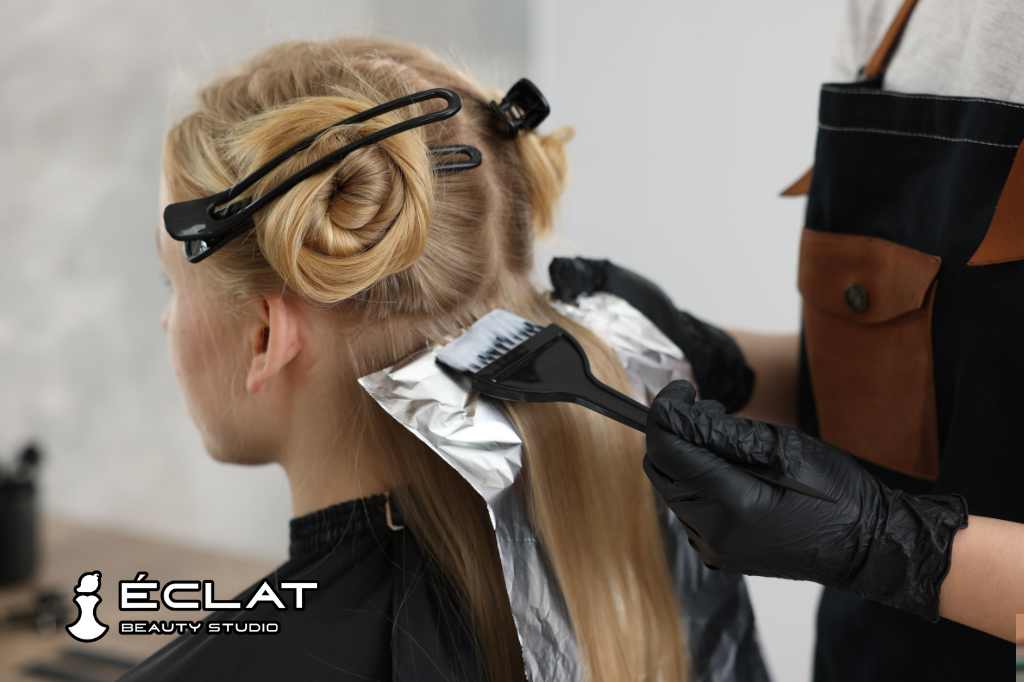
Bleaching your hair can completely change your look, but it can also damage your hair if it is done incorrectly.
Many people love lighter hair colors, blonde tones, highlights, or fashion shades, but they are also scared of dryness, breakage, rough texture, or hair falling out after bleaching.
This fear is real.
Bleach is a strong chemical process that changes the structure of your hair. If the process is rushed or done without proper care, hair can become weak and difficult to manage.
The good news is that hair can be bleached more safely when the right steps are followed.
If you live in Toronto, proper aftercare matters even more because the city’s weather can make bleached hair feel drier and more fragile throughout the year.
Why Does Bleaching Damage Hair?
Hair bleach works by opening the outer layer of the hair, called the cuticle, and removing natural pigment from inside the strand.
This process weakens the hair temporarily.
When bleaching is not done properly, it can lead to:
• Dryness
• Hair breakage
• Split ends
• Rough texture
• Loss of shine
• Weak hair elasticity
The more aggressive the bleaching process is, the higher the chance of damage.
That is why safe bleaching is not only about getting lighter hair. It is about protecting the health of your hair during the process.
What Mistakes Cause Severe Bleach Damage?
Many people damage their hair because they focus only on the final color.
Bleaching Hair Too Quickly
Trying to go from very dark hair to platinum blonde in one session can overload the hair.
Hair often needs gradual lifting over multiple appointments.
Using Strong Developer Incorrectly
High-volume developers lift color faster, but they also increase damage risk if not used properly.
Bleaching Already Damaged Hair
Hair that is already dry, overprocessed, or weak struggles much more during bleaching.
Following Random Online Tutorials
Many online tutorials ignore hair condition, texture, and previous color history.
What works for one person may seriously damage someone else’s hair.
How Can You Prepare Your Hair Before Bleaching?
Healthy preparation makes a huge difference.
Should You Deep Condition Before Bleaching?
Yes.
Hydrated hair handles chemical processing better than dry hair.
Using moisturizing masks or protein treatments before bleaching can help strengthen the hair structure.
Should You Avoid Heat Styling Before Bleaching?
Definitely.
Frequent heat styling weakens hair over time. Reducing heat exposure before bleaching helps lower the risk of breakage.
Is It Better to Bleach Dirty Hair?
Slightly natural hair oils can help protect the scalp during the process. Most professionals recommend not washing hair immediately before bleaching.
What Is the Safest Way to Bleach Hair?
Safe bleaching is about control and patience.
Why Is Professional Application Safer?
Professional stylists examine:
• Hair condition
• Previous color history
• Hair porosity
• Scalp sensitivity
This helps them choose the safest technique and timing.
A salon professional also monitors how the hair reacts during the process instead of blindly following timing instructions.
Should Hair Be Bleached in Multiple Sessions?
In many cases, yes.
Lifting hair slowly is usually safer than forcing dramatic results in one appointment.
This is especially important for:
• Dark hair
• Previously colored hair
• Fine or fragile hair
Multiple sessions reduce stress on the hair shaft and help preserve strength.
Can Bond-Building Treatments Help During Bleaching?
Yes.
Modern salons often use bond-protecting treatments during bleaching services. These help strengthen the internal hair structure and reduce breakage.
This is one reason professional bleaching often gives healthier results than at-home bleaching kits.
How Does Toronto Weather Affect Bleached Hair?
The climate in Toronto can make bleached hair harder to maintain.
Does Winter Make Bleached Hair Drier?
Yes.
Cold outdoor air combined with indoor heating removes moisture from the hair. Bleached hair already loses some moisture during processing, so winter dryness can make it feel brittle or rough.
Does Summer Humidity Affect Bleached Hair?
Humidity can increase frizz and puffiness, especially in chemically treated hair.
People living or working in Downtown Toronto often move between humid outdoor conditions and dry indoor air throughout the day, which can stress bleached hair even more.
That is why ongoing moisture and repair treatments are important after bleaching.
How Should You Care for Hair After Bleaching?
Aftercare is one of the biggest factors in preventing damage.
Use Sulfate-Free Shampoo
Strong shampoos can strip moisture and fade toner quickly.
Gentle sulfate-free products help maintain balance.
Add Moisture Back Into the Hair
Bleached hair needs hydration regularly.
Use:
• Deep conditioning masks
• Leave-in conditioners
• Lightweight oils for ends
This helps improve softness and flexibility.
Limit Heat Styling
Frequent heat styling on bleached hair increases dryness and breakage risk.
When using heat tools:
• Always apply heat protectant
• Use lower temperatures when possible
• Avoid daily heat styling
Trim Split Ends Regularly
Bleached hair is more likely to develop split ends.
Regular trims help keep hair healthier and easier to manage.
When Should You Visit a Professional Salon for Bleaching?
Professional bleaching is especially important if:
• Your hair is dark
• Your hair has previous color
• Your hair already feels damaged
• You want platinum or very light shades
• You are unsure about developer strength or timing
Professional salons focus not only on color results but also on maintaining hair health throughout the process.
If you are considering hair bleaching and want to reduce the risk of damage, you can consult with Eclat Beauty. Their team can assess your hair condition and recommend a safer bleaching and aftercare plan based on your hair type and goals.
Frequently Asked Questions
Can bleach permanently damage hair?
Bleach can weaken hair if overused or applied incorrectly, but proper care and professional techniques help reduce severe damage.
Is it safer to bleach hair professionally?
Yes. Professional stylists understand timing, product strength, and hair condition better than most DIY methods.
How many times can you bleach hair safely?
This depends on hair health, texture, and previous processing. Many people need multiple sessions for lighter shades.
Can damaged hair recover after bleaching?
With proper treatments, hydration, trims, and reduced heat styling, hair condition can improve significantly over time.
What is the safest hair color process for dark hair?
Gradual lightening over multiple sessions is usually the safest approach for dark hair.
Bleaching your hair does not automatically mean destroying it. The biggest difference comes from preparation, patience, proper technique, and aftercare.
Trying to rush the process often leads to dryness, breakage, and expensive repair later. But when bleaching is done carefully and professionally, hair can stay healthier, softer, and easier to manage.
The goal should never be just lighter hair. It should be healthy hair that still feels strong after the transformation.
