
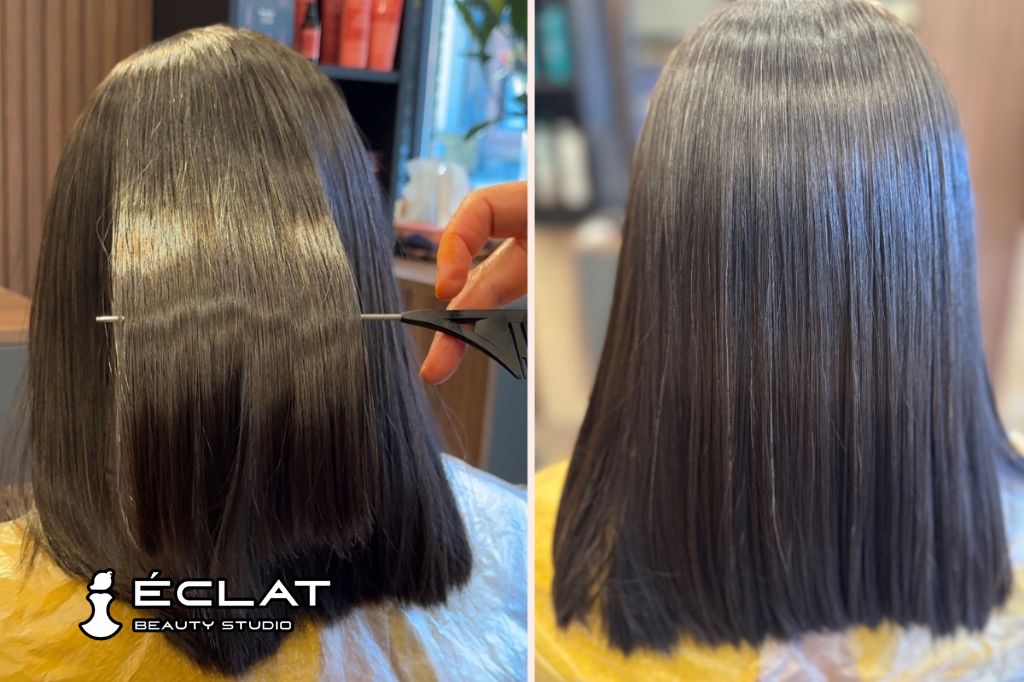
Dry, frizzy, and damaged hair can be difficult to manage, especially when regular shampoo and conditioner no longer seem to make a difference. A protein hair treatment may help strengthen weak strands, improve texture, and reduce the appearance of damage. But does every dry or frizzy hair type need protein? Not necessarily.
Does Protein Treatment Really Work for Dry, Frizzy and Damaged Hair?
A protein treatment can help hair that has become weak, brittle, stretchy, or damaged from colouring, bleaching, heat styling, and chemical processing. It works by helping reinforce areas of the hair that have lost strength, which can improve the hair’s feel, manageability, and appearance.
However, dry hair does not automatically mean that your hair needs protein. Some hair mainly needs moisture, while damaged hair may benefit from a combination of strengthening and conditioning. Understanding the difference can help you choose a treatment that actually suits your hair.
What Is a Protein Hair Treatment?
A protein hair treatment is a salon or at-home treatment designed to provide strengthening ingredients that help support the hair’s structure. Hair is largely made of a protein called keratin, and chemical processing and repeated heat exposure can affect the hair’s strength and condition.
Professional protein treatments can contain different types of proteins or amino-acid-based ingredients. The exact formula and results depend on the product and the condition of the hair.
The goal is generally to make weak hair feel stronger, smoother, and easier to manage rather than simply covering up the appearance of damage.
How Does Protein Treatment Help Damaged Hair?
Protein treatments can be useful when hair has become weak because of bleaching, colouring, chemical services, or repeated heat styling. These processes can leave the hair more fragile and prone to breakage.
A suitable protein treatment can help improve the feel and strength of compromised hair. It may also make the hair easier to comb, style, and manage.
This does not mean a protein treatment permanently repairs every type of damage. Severely damaged hair may still need trimming, gentler styling, reduced chemical processing, and an appropriate conditioning routine.
Can Protein Treatment Help Dry Hair?
Protein treatment can sometimes help dry-looking hair, but dryness alone is not a reason to automatically choose protein. Hair that feels rough, stiff, or very dry may need more moisture and conditioning instead.
This is why a professional assessment can be useful. If your hair is weak and breaking but also feels dry, a stylist can consider both its strength and moisture needs before recommending a treatment.
The goal is to maintain a healthy balance rather than repeatedly adding protein without considering what the hair actually needs.
Can Protein Treatment Reduce Frizz?
Protein treatments may help reduce the appearance of frizz when the frizz is connected to damaged or weakened hair. Strengthening and smoothing the hair can make it feel more manageable and give it a smoother-looking finish.
However, frizz can have many causes. Humidity, dryness, natural texture, damage, friction, heat styling, and improper hair care can all contribute to frizz.
If your main concern is frizz, a protein treatment may be one part of a larger hair-care approach rather than a permanent solution on its own.
Can Protein Treatment Help With Hair Breakage?
Protein treatments may help hair that breaks easily because of weakness or chemical damage. Strengthening the hair can improve its ability to handle everyday brushing and styling.
If you notice excessive breakage, it is also important to consider what may be causing it. Frequent bleaching, high heat, tight hairstyles, rough brushing, and overprocessing can all contribute to hair damage.
A treatment can support the hair, but reducing the source of damage is equally important for maintaining healthier-looking strands.
What Are the Signs Your Hair May Need Protein?
Hair that feels unusually weak, stretches excessively when wet, breaks easily, or has become fragile after chemical processing may benefit from a strengthening treatment.
Some common signs to pay attention to include:
- Hair breaking during brushing
- Excessive stretching when wet
- Weak or fragile strands
- Damage after bleaching or colouring
- Hair that feels overly soft or limp
- Increased breakage after heat styling
- Difficulty maintaining the hair’s shape
These signs do not automatically confirm that protein is what your hair needs. Hair condition, texture, previous treatments, and moisture levels should all be considered.
Protein vs. Moisture: How Do You Know What Your Hair Needs?
Protein and moisture serve different purposes, which is why choosing between them can sometimes be confusing. Protein treatments are generally focused on strengthening weakened hair, while moisturizing treatments help improve softness, flexibility, and hydration.
If your hair is weak, stretchy, and breaking, a strengthening treatment may be worth considering. If it mainly feels dry, rough, or stiff, moisture may be more important.
Some damaged hair needs both. This is why using a professional treatment based on your hair’s current condition can be more useful than choosing a product simply because it is popular.
Who Can Benefit From a Protein Hair Treatment?
Protein treatments can be particularly useful for people whose hair has been weakened by chemical services or repeated styling. This can include hair that has been coloured, highlighted, bleached, chemically processed, or frequently exposed to heat.
They may also be considered for hair that feels fragile, breaks easily, or has lost some of its natural strength and manageability.
Healthy hair does not necessarily need frequent protein treatments. The treatment should be selected according to the condition of the hair rather than used simply as a regular beauty step.
Can You Get a Protein Treatment After Colouring or Bleaching?
Protein treatments may be helpful for hair that has been weakened by colouring or bleaching. Chemical processing can affect the hair’s condition, particularly when services are repeated or combined with frequent heat styling.
A salon professional can assess the hair before deciding whether a protein treatment is appropriate and when it should be performed.
This is especially useful if you regularly get highlights, colour, or other chemical services and have noticed increased dryness, breakage, or changes in texture.
How Often Should You Get a Protein Treatment?
There is no single schedule that works for everyone. The ideal frequency depends on your hair’s condition, previous chemical treatments, styling habits, and the specific protein treatment being used.
Hair that is significantly damaged may need a different approach from healthy hair that only needs occasional conditioning. Too much protein can also leave some hair feeling stiff or brittle, so more treatment is not always better.
A stylist can help determine when your hair actually needs another strengthening treatment.
Protein Treatment vs. Keratin Treatment: What’s the Difference?
Protein treatments and keratin treatments are not necessarily the same service. Protein treatments are generally focused on strengthening and conditioning hair, while some keratin services are designed primarily to smooth the hair and reduce frizz.
The exact result depends on the specific product and treatment method. Some professional keratin services also involve heat and chemical processing, so they should not automatically be treated as interchangeable with a conditioning protein treatment.
If your main concern is weak or damaged hair, discuss the condition of your hair with your stylist before choosing between different treatments.
What Should You Expect From a Professional Protein Treatment in Toronto?
A professional protein treatment usually begins with an assessment of the hair. Your stylist can look at its texture, strength, dryness, previous colour or chemical services, and overall condition before recommending the appropriate treatment.
At Eclat Beauty in Toronto, Protein Therapy is designed for hair that may be weak, fragile, damaged, dry, frizzy, or affected by previous processing. A personalized approach allows the treatment to be considered based on the client’s actual hair condition rather than applying the same process to everyone.
For Toronto clients who regularly colour their hair, use heat styling tools, or struggle with dryness and breakage, a professional consultation can be a useful first step toward choosing the right hair treatment.
How Can You Protect Your Hair After a Protein Treatment?
A good salon treatment is only one part of maintaining healthier-looking hair. Your everyday routine can also affect how long the improvement lasts.
Try to limit excessive heat, avoid rough brushing, use suitable hair-care products, and follow any aftercare recommendations from your stylist. If your hair has been chemically processed, spacing out aggressive services can also help reduce additional stress on the strands.
Regular trims may also be useful when split or severely damaged ends are present.
Frequently Asked Questions
Does protein treatment work for damaged hair?
Yes, a suitable protein treatment can help improve the strength, texture, and manageability of certain types of damaged hair. Results depend on the cause and severity of the damage.
Does protein treatment help frizzy hair?
It can help reduce the appearance of frizz when damaged or weakened hair is contributing to the problem. However, frizz can have several causes, so protein treatment is not a universal solution.
Does protein treatment help dry hair?
It can help some damaged dry-looking hair, but very dry hair may also need moisture and conditioning. A professional assessment can help determine whether protein, moisture, or a combination is appropriate.
How do I know if my hair needs protein?
Weakness, breakage, excessive stretching when wet, and damage from bleaching, colouring, or heat may indicate that your hair could benefit from strengthening. A stylist can assess your hair before recommending treatment.
Can too much protein damage hair?
Using protein too frequently can make some hair feel stiff, dry, or brittle. The appropriate frequency depends on the hair’s condition and the treatment being used.
How often should I get a protein treatment?
There is no universal schedule. Your treatment frequency should depend on your hair condition, chemical history, styling routine, and the specific product used.
Is protein treatment good for bleached hair?
Bleached hair can become weak and fragile, so a suitable protein treatment may help support its condition. However, heavily damaged hair may also need moisture, gentler care, and professional assessment.
