
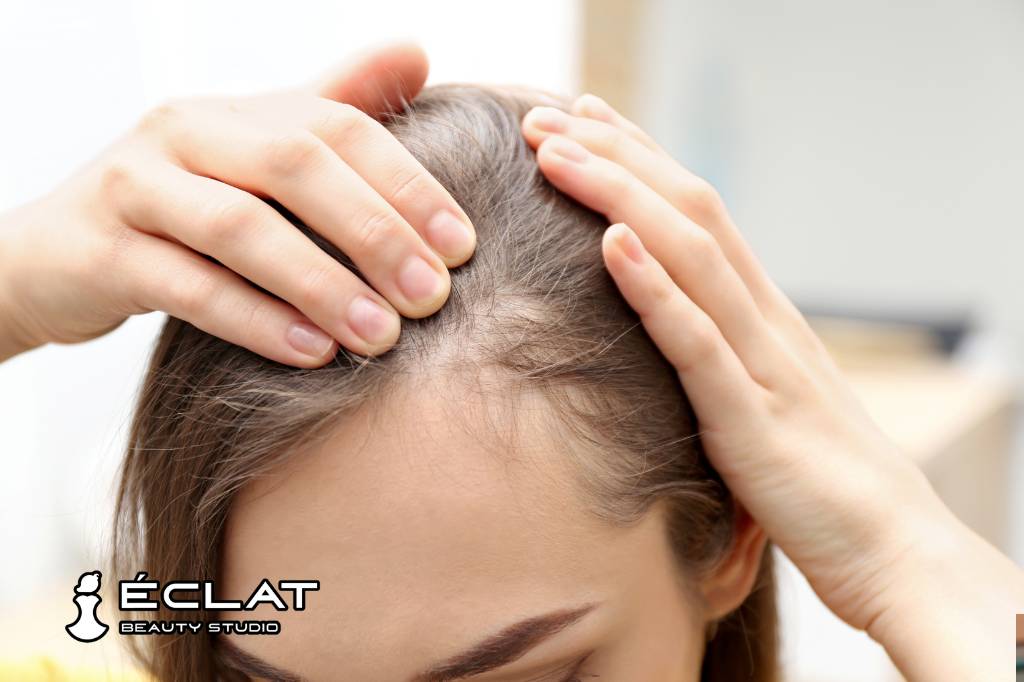
Hair fall and thinning hair can be stressful, especially when you start noticing more hair in the shower, on your pillow, or in the mirror every day.
For many people, it is not just about appearance. Hair loss affects confidence, self-image, and daily comfort. Some people begin avoiding certain hairstyles, while others constantly worry about their scalp becoming more visible.
If you live in Toronto, weather, stress, lifestyle, and even environmental conditions can make the problem feel worse.
The good news is that hair fall does not always mean permanent hair loss. In many cases, improving scalp health, root strength, and hair care habits can make a noticeable difference.
Why Does Hair Fall and Thinning Hair Happen?
Hair naturally sheds every day. Losing some strands is normal.
The problem begins when shedding becomes excessive or when hair grows back thinner and weaker than before.
Common causes include:
• Stress
• Hormonal changes
• Poor scalp health
• Nutritional deficiencies
• Heat and chemical damage
• Tight hairstyles
• Genetics
Many people focus only on hair strands, but healthy hair growth actually starts at the scalp and roots.
That is why modern hair fall treatments focus heavily on root health and scalp condition.
How Does Toronto Lifestyle Affect Hair Health?
Life in Downtown Toronto can be hard on hair.
Daily routines often involve:
• Stressful schedules
• Long commuting hours
• Indoor heating during winter
• Humid summer weather
• Pollution and dust exposure
Also Read : Best Hair Treatments for Dry and Frizzy Hair in Toronto Weather
Cold winters can dry out the scalp and weaken hair strands, while summer humidity can make thinning hair appear flatter and less voluminous.
Many people searching for hair fall treatment Toronto solutions are not only dealing with hair loss itself. They are also struggling with poor scalp condition and damaged roots caused by lifestyle and environment.
Why Is Root Health So Important for Hair Growth?
Healthy roots are the foundation of healthy hair.
When roots become weak, hair may:
• Fall out more easily
• Grow back thinner
• Lose strength and density
• Become fragile over time
This is why professional scalp and root-focused treatments are becoming more popular in Toronto.
Treating only the visible hair strands often gives temporary results. Supporting the scalp and follicles creates better long-term improvement.
What Is Biotin Therapy and How Can It Help Hair Fall?
Biotin therapy has become one of the most talked-about thinning hair solutions in recent years.
Biotin is a B vitamin that supports keratin production, which is important for healthy hair structure.
Biotin-focused treatments may help:
• Strengthen weak hair
• Improve hair texture
• Support healthier growth
• Reduce breakage
However, biotin is not a miracle cure by itself.
Hair fall usually has multiple causes, which is why biotin therapy works best when combined with proper scalp care, nutrition, and healthy hair practices.
Many salons and scalp specialists now include biotin-based products as part of professional hair strengthening treatments.
How Do Scalp Treatments Help Thinning Hair?
A healthy scalp creates a better environment for hair growth.
Over time, the scalp can develop:
• Oil buildup
• Product residue
• Dryness
• Irritation
• Poor circulation
Professional scalp treatments focus on deeply cleansing and improving scalp balance.
Benefits may include:
• Better root support
• Cleaner follicles
• Improved scalp hydration
• Reduced buildup
• Healthier growth environment
This is one reason scalp treatments have become a common hair fall treatment Toronto clients look for today.
How Can You Stop Hair Fall Naturally?
Many people searching “how to stop hair fall” want practical steps they can start immediately.
Here are some habits that may help support healthier hair over time.
Reduce Heat Styling
Frequent heat exposure weakens hair strands and increases breakage.
Try reducing:
• Flat iron use
• High heat blow-drying
• Daily curling
Improve Scalp Care
Scalp health matters just as much as hair care.
Simple habits include:
• Washing buildup regularly
• Using gentle shampoos
• Avoiding harsh scratching
• Keeping the scalp hydrated
Eat a Balanced Diet
Hair health depends heavily on nutrition.
Low iron, protein, or vitamin levels may contribute to shedding and thinning.
Avoid Tight Hairstyles
Constant tension from tight ponytails or buns may stress the roots over time.
Loose hairstyles reduce unnecessary pulling.
When Should You Consider Professional Hair Fall Treatments?
If hair thinning continues for months despite home care, professional guidance may help.
Warning signs include:
• Visible scalp areas
• Widening hair part
• Excessive shedding daily
• Weak hair that breaks easily
• Noticeable loss of density
Professional treatments focus on identifying the condition of the scalp and roots instead of guessing.
Depending on the situation, treatments may include:
• Biotin therapy
• Scalp detox treatments
• Root-strengthening treatments
• Deep hydration therapy
• Professional scalp analysis
If you are looking for a thinning hair solution in Toronto, you can consult with ECLAT Beauty Studio to discuss scalp-focused hair strengthening and root health treatments based on your hair condition.
Why Do People Ignore Hair Thinning for Too Long?
One of the biggest problems is waiting too long.
Many people hope the issue will fix itself.
Others feel overwhelmed by online advice or become frustrated after trying random products without results.
Hair thinning often progresses gradually, which makes it easy to ignore at first.
But early care usually gives better results than waiting until thinning becomes severe.
Can Stress Really Cause Hair Fall?
Yes.
Stress is one of the most common contributors to temporary hair shedding.
Busy lifestyles, poor sleep, anxiety, and work pressure can affect the natural hair growth cycle.
This is especially common in large cities like Toronto where daily routines can become mentally exhausting.
Reducing stress alone may not completely stop hair fall, but it can support healthier growth over time.
Frequently Asked Questions
What is the best treatment for thinning hair?
The best treatment depends on the cause. Scalp treatments, biotin therapy, and root-focused care are commonly used for thinning hair support.
Can thinning hair grow back?
In many cases, yes. Early treatment and proper scalp care may improve hair density and strength.
Does biotin stop hair fall completely?
Biotin can support healthier hair growth, but it works best as part of a broader hair care approach.
How often should I get scalp treatments?
This depends on scalp condition and hair goals. Some people benefit from monthly treatments.
Is hair fall common during stress?
Yes. Stress-related hair shedding is very common and often temporary.
Hair fall and thinning hair can feel frustrating, but they are often signs that your scalp and roots need more attention, not just your hair strands.
Improving scalp health, supporting root strength, and following consistent care routines can make a real difference over time.
The goal is not only to reduce shedding. It is to create healthier conditions for stronger, fuller-looking hair in the long run.
