
Wearing a hijab every day can be comfortable, practical, and part of your personal style. But many women also worry about what happens to their hair underneath. Tight hairstyles, constant pulling, friction, sweat, and tying the hair in the same position every day can sometimes lead to breakage and stress on the hair.
The good news is that you do not need complicated hairstyles to protect your hair. In fact, simple and comfortable styles are often the best choice.
The right hairstyle under a hijab should keep your hair secure without pulling too tightly on the roots. It should also allow your scalp and hair to stay comfortable throughout the day.
For hijabi women in Toronto, this can be especially important during busy workdays, long commutes, cold winters, and humid summer weather. Here are five practical hairstyles that can help reduce unnecessary hair breakage.
Which Hairstyles Are Best to Wear Under a Hijab?
The best hairstyles under a hijab are usually loose, low-tension styles that reduce pulling on the scalp and avoid putting pressure on the same area every day. Changing your hairstyle regularly can also help reduce repeated stress on one section of your hair.
Your goal should not be to make your hair as tight and flat as possible. A hairstyle that feels comfortable is often a better choice for long-term hair health. Below are five simple styles that work well for many women.

Is a Low Loose Bun Good for Wearing Under a Hijab?
A low, loose bun is one of the simplest hairstyles to wear under a hijab because it keeps the hair together without creating too much tension. It can be especially useful for medium to long hair.
Instead of pulling your hair tightly into a high bun, gather it gently near the lower part of your head. Use a soft hair tie or scrunchie rather than a very tight elastic. A low bun can also reduce pressure caused by placing the hair in the exact same tight position every day.
Try changing the position slightly from time to time. For example, wear the bun slightly lower one day and closer to the side another day. This can help avoid constant tension in one area.
Also Read : How Muslim Women Can Enjoy Salon and Spa Services Without Compromising Privacyc
Can a Loose Braid Help Prevent Hair Breakage?
A loose braid can be a practical choice because it keeps the hair organized and reduces tangling throughout the day. Less tangling can mean less pulling and breakage when you brush your hair later.
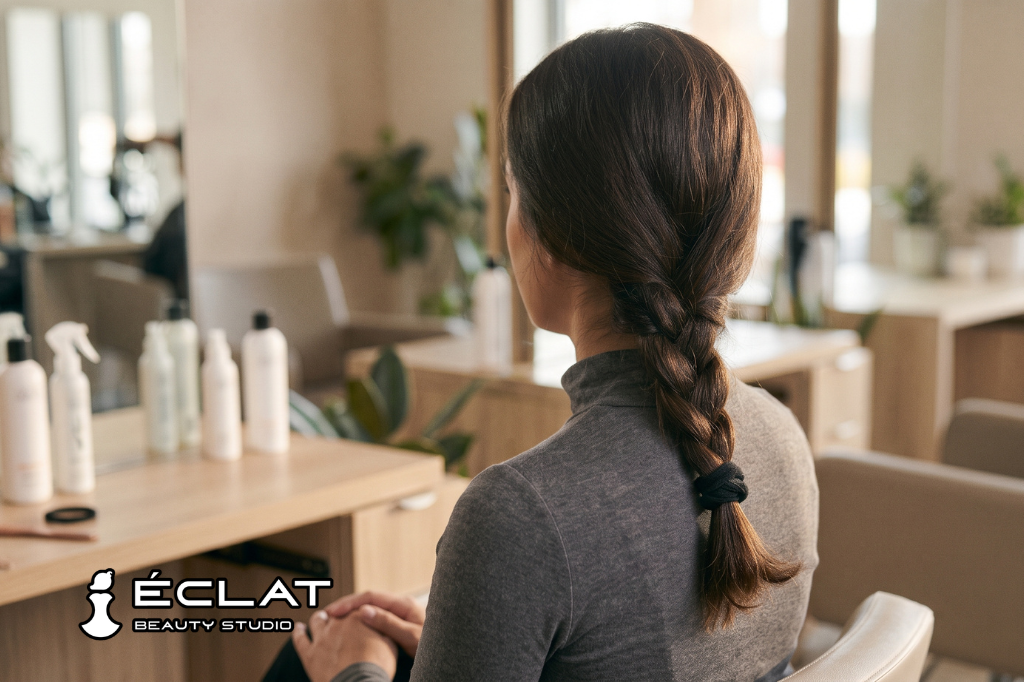
A simple three-strand braid is usually enough. You do not need to pull the sections tightly. Keep the braid comfortable and secure the end with a gentle hair tie.
A loose braid may work especially well for women with longer hair. It can prevent hair from becoming tangled underneath the hijab while also reducing friction between individual strands.
However, avoid making the braid extremely tight. If your scalp feels sore or uncomfortable, the hairstyle is probably pulling too much.
Is a Low Ponytail Safe to Wear Under a Hijab?
A low ponytail can be a comfortable and easy hairstyle when it is not tied too tightly. It is a good option for busy mornings when you want something quick and simple.
Keep the ponytail low and use a soft hair tie that does not pull aggressively on the strands. Avoid repeatedly tightening the ponytail during the day.
One common mistake is wearing a tight ponytail in the exact same position every day. This can place repeated tension on the same section of hair. Try alternating between a low ponytail, loose braid, and low bun throughout the week.
Can a Half-Up Hairstyle Work Under a Hijab?
A loose half-up hairstyle can work well for some women, especially when they want to avoid gathering all their hair tightly into one area. It can reduce the feeling of pressure caused by a full ponytail or bun.
Keep the upper section loose and avoid pulling it tightly away from the hairline. Use a gentle clip or soft hair tie if possible.
This style may be more suitable depending on your hair length and the type of hijab you wear. The most important thing is comfort. If the hairstyle creates a bulky area or feels uncomfortable under your hijab, choose a flatter and looser option.
Is a Loose Low Twist a Good Option?
A low twist is another simple hairstyle that can keep your hair together without requiring tight pulling. It can be a useful alternative for women who do not want to wear a bun every day.
Gather your hair gently at the lower part of your head and loosely twist the length of your hair. Secure it with a soft tie or comfortable clip that does not pull.
This style can also help you change the direction and position of your hair during the week. Variety matters because constantly putting pressure on the same area may contribute to breakage over time.
What Hairstyles Should You Avoid Under a Hijab?
The main issue is usually not one specific hairstyle but excessive tension. Styles that constantly pull on the roots or hairline can put unnecessary stress on the hair.
Try to avoid:
- Very tight high buns
- Extremely tight ponytails
- Tight braids worn for long periods
- Heavy hairstyles that pull on the scalp
- Using tight elastics every day
- Wearing the same hairstyle in the same position constantly
If you feel pain, tightness, headaches, or soreness after tying your hair, that is a sign to loosen the style.
Why Is Changing Your Hairstyle Important?
Changing your hairstyle helps avoid placing repeated tension on exactly the same part of your scalp. Even a simple hairstyle can become stressful if it is worn tightly in the same position every day.
You can create a simple rotation. Wear a loose braid one day, a low bun the next day, and a low ponytail on another day. This gives different areas of your scalp a break.
You should also give your hair time to rest when you are at home. If you do not need to tie it, let it down or wear it loosely.
Should You Tie Wet Hair Before Wearing a Hijab?
It is generally better to allow your hair to dry properly before tying it up for a long period. Wet hair is more fragile and can stretch more easily, which may increase the risk of breakage.
Make sure your roots and scalp are reasonably dry before putting your hair into a hairstyle and covering it for several hours. This can also help you feel more comfortable throughout the day.
If you wash your hair in the morning, consider planning enough time for drying before leaving home.
How Can You Protect Your Hair From Friction Under a Hijab?
Friction can happen when your hair rubs against rough fabrics, tight undercaps, or accessories. Choosing comfortable materials and avoiding excessive tightness can make a difference.
Make sure your undercap is not pulling tightly on your hairline. You can also pay attention to how your hair feels at the end of the day. If you regularly notice tangling, breakage, or pressure in one area, it may be time to change your hairstyle or accessories.
A good hair care routine should include gentle detangling, regular conditioning, and avoiding unnecessary pulling.
When Should You Consider Professional Hair Care?
If you notice ongoing hair breakage, thinning, excessive shedding, or scalp discomfort, changing your hairstyle may not be enough. Professional guidance can help you understand what your hair actually needs.
At Eclat Beauty in Downtown Toronto, hijabi women can enjoy hair care services in a comfortable, private, women-focused environment. A professional stylist can help assess concerns such as dryness, breakage, scalp buildup, or damaged hair and recommend suitable treatments based on your hair type.
The goal is not just to make your hair look good for one day. A proper routine can help you make better decisions about styling, washing, treatments, and long-term hair care.
Frequently Asked Questions
Can wearing a hijab cause hair breakage?
Wearing a hijab itself does not automatically cause hair breakage. However, very tight hairstyles, repeated pulling, friction, and keeping hair in the same position for long periods may contribute to breakage.
What is the best hairstyle under a hijab?
For many women, loose low-tension styles such as a low bun, loose braid, low ponytail, or loose twist can be comfortable choices.
Should I wear my hair in the same style every day?
It is better to change your hairstyle regularly. Rotating between a few comfortable styles can help reduce repeated pressure on the same area of your scalp.
Is a tight bun bad for your hair?
A very tight bun can place tension on your hair and scalp. If you regularly experience pain, headaches, or soreness, try loosening the style or choosing a lower-tension option.
Can I braid my hair every day under a hijab?
A loose braid may be suitable for many women, but avoid making it too tight. You can also alternate it with other comfortable styles.
Final Thoughts
The best hairstyle under a hijab is usually one that keeps your hair comfortable without pulling tightly on your scalp. A loose low bun, loose braid, low ponytail, half-up style, and low twist are all practical options depending on your hair length and personal comfort.
The most important thing is to avoid excessive tension and give your hair variety. Small changes, such as using softer hair ties, avoiding tight styles, changing your hairstyle regularly, and allowing your hair to dry properly, can help reduce unnecessary breakage.
If your hair continues to feel weak, dry, or difficult to manage, professional hair care can help you understand what your hair and scalp need and build a routine that works for your lifestyle.
